

Role
Lead Designer
Project Timeline
~2 Months
Industry
Marketing Technology / AdTech
As a 0→1 startup build, user pain points, business requirements, and feature priorities were gathered directly from the founder during active client pilots. The translation of these requirements into product architecture, UI, and the design system was led by me. All screens showcased here were designed and shipped to development.
Overview
Marketing teams don’t struggle because they lack creative ideas they struggle because their workflow is fragmented. They research competitors in one tool, store assets in another, provide feedback in chat apps, and launch campaigns in completely different platforms.
Adnova was built to solve this problem by bringing the entire creative lifecycle into a single, AI-powered platform. Built from the ground up, the platform unifies research, asset management, analytics, and campaign execution into one seamless workflow.
Pain points
The Manual Launch Grind
Senior media buyers were spending hours manually uploading, naming, and duplicating ads. Launching 60 ads could take 3 hours, trapping strategists in low-value administrative work.
Fragmented Tool Stack
Teams were paying upwards of $1,400/month for a fragmented stack of point solutions (e.g., Atria, Creative OS, Ad manage IO) just to handle research, asset management, and analytics separately.
Blind Creative Data
No human can manually tag 200 ads across 14 dimensions (hook, angle, persona, theme). Without AI-driven auto-tagging, teams lacked visibility into why creatives performed, leading to repetitive concepts and wasted ad spend.
Design Approach & Architecture
As a 0→1 startup built directly with the founder, formal UX research phases were bypassed in favour of rapid, iterative feedback. User pain points and business requirements were gathered directly from the founder during active client pilots and translated immediately into product strategy.
The core architectural decision was to build a unified workflow rather than a point solution. Instead of adding another tool to a fragmented stack, the platform was designed to absorb the functionality of multiple existing tools into a single, continuous lifecycle.
By structuring the platform around this continuous workflow, data flowed seamlessly from one stage to the next.
User Interface
Designing an end-to-end SaaS workflow means balancing deep data analytics with intuitive asset management. The following screens showcase how the fragmented marketing lifecycle was translated into a cohesive, AI-powered platform from competitor research to multi-platform campaign execution.
Inspiration Discovery
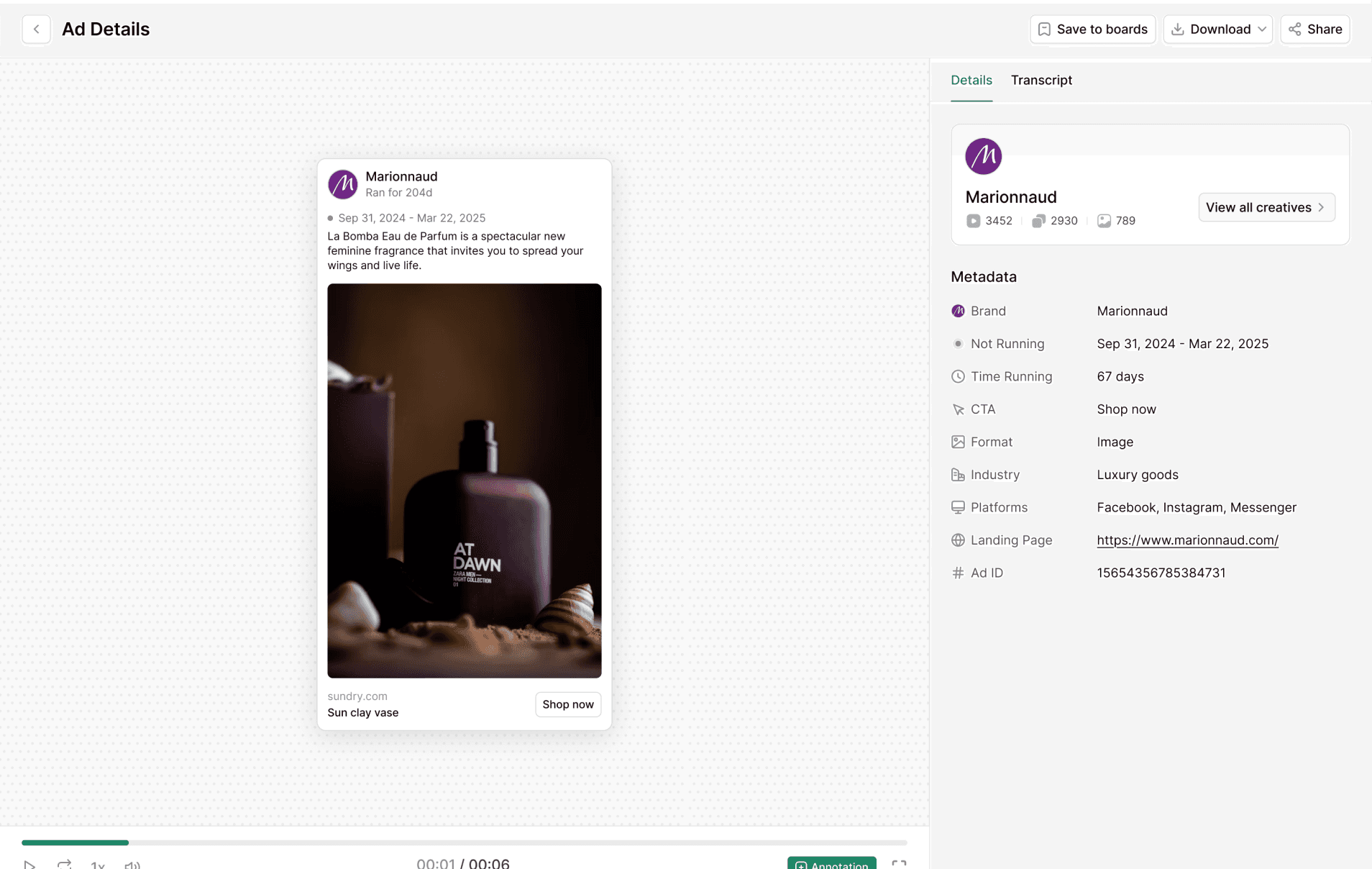
The platform serves as a massive ad intelligence tool. The discovery UI allows marketers to search competitor ads, filter by platform, and view active run times. By presenting this data in a clean, visual grid, teams can quickly identify industry trends and curate winning creative strategies before beginning production.


Ad Details & Metadata
When a user finds an inspiring ad, the interaction goes beyond just watching the video. A detailed side modal surfaces rich metadata—landing page URLs, ad IDs, and active run times. Crucially, AI-generated transcripts are provided directly within the UI, allowing teams to scan video hooks and scripts without watching the entire video.
Creative Hub
The Creative Hub acts as the operational center of the platform. Designed to replace tools like Frame.io and Dropbox, the UI allows teams to organize assets into nested boards, filter by custom fields, and manage large volumes of creative files. The interface prioritizes visual scanning to make asset discovery frictionless.

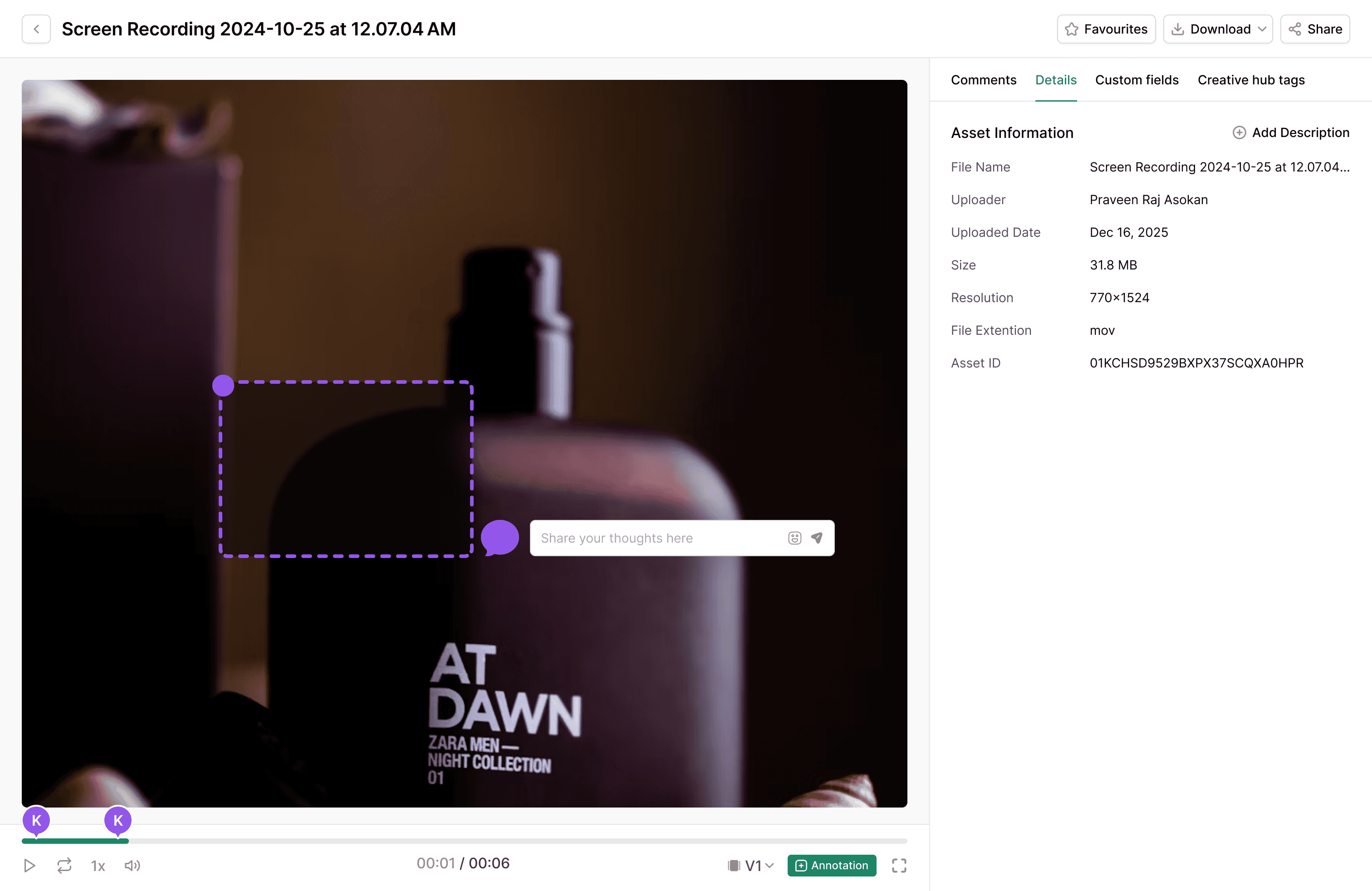
Asset Review & Annotation
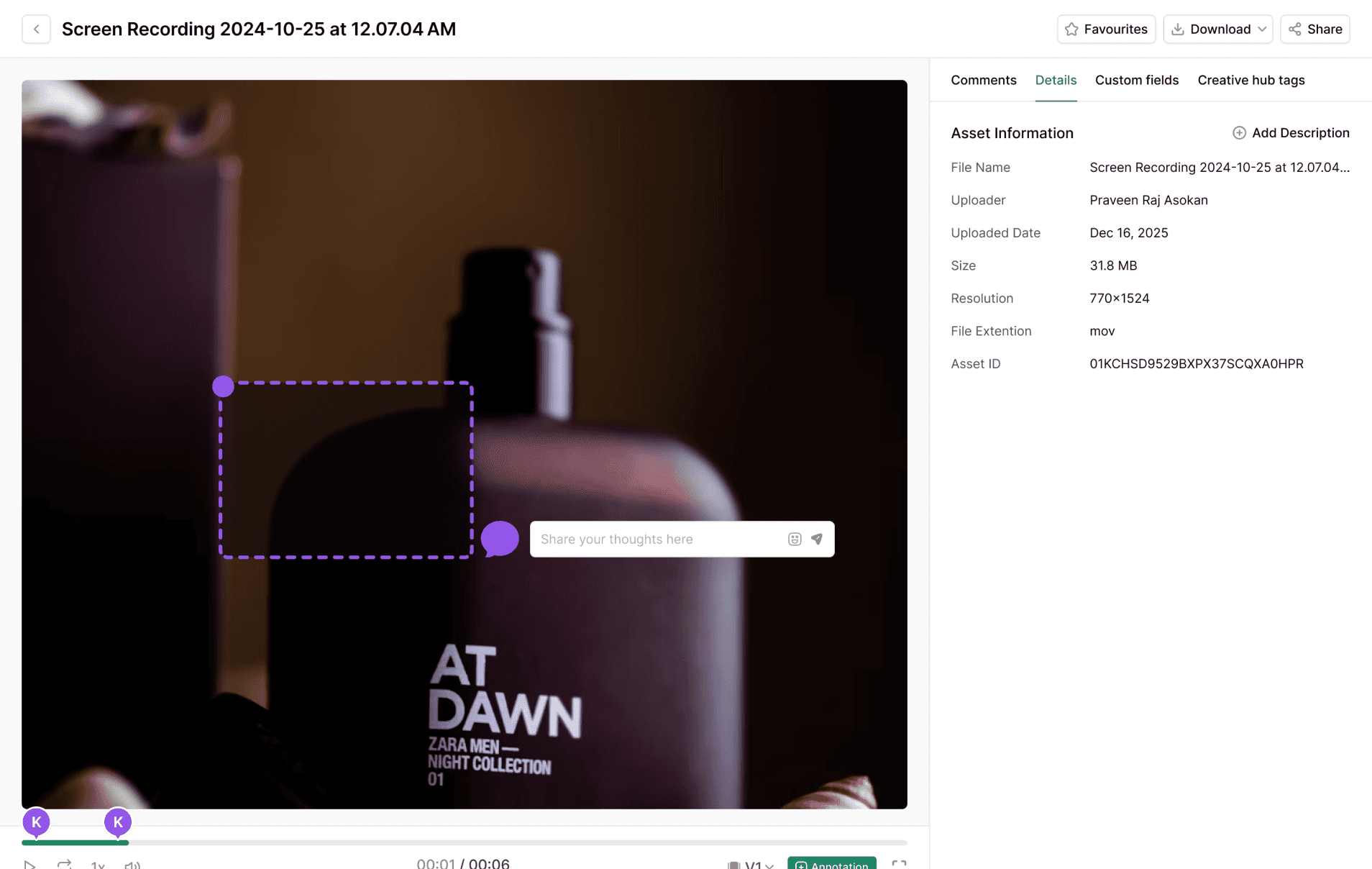
Collaboration is baked directly into the asset review process. The UI features a built-in video player with timestamped visual annotations. Stakeholders can leave comments, view asset metadata (file type, resolution, uploader), and tag creatives, keeping all production feedback centralized rather than scattered across Slack or email.
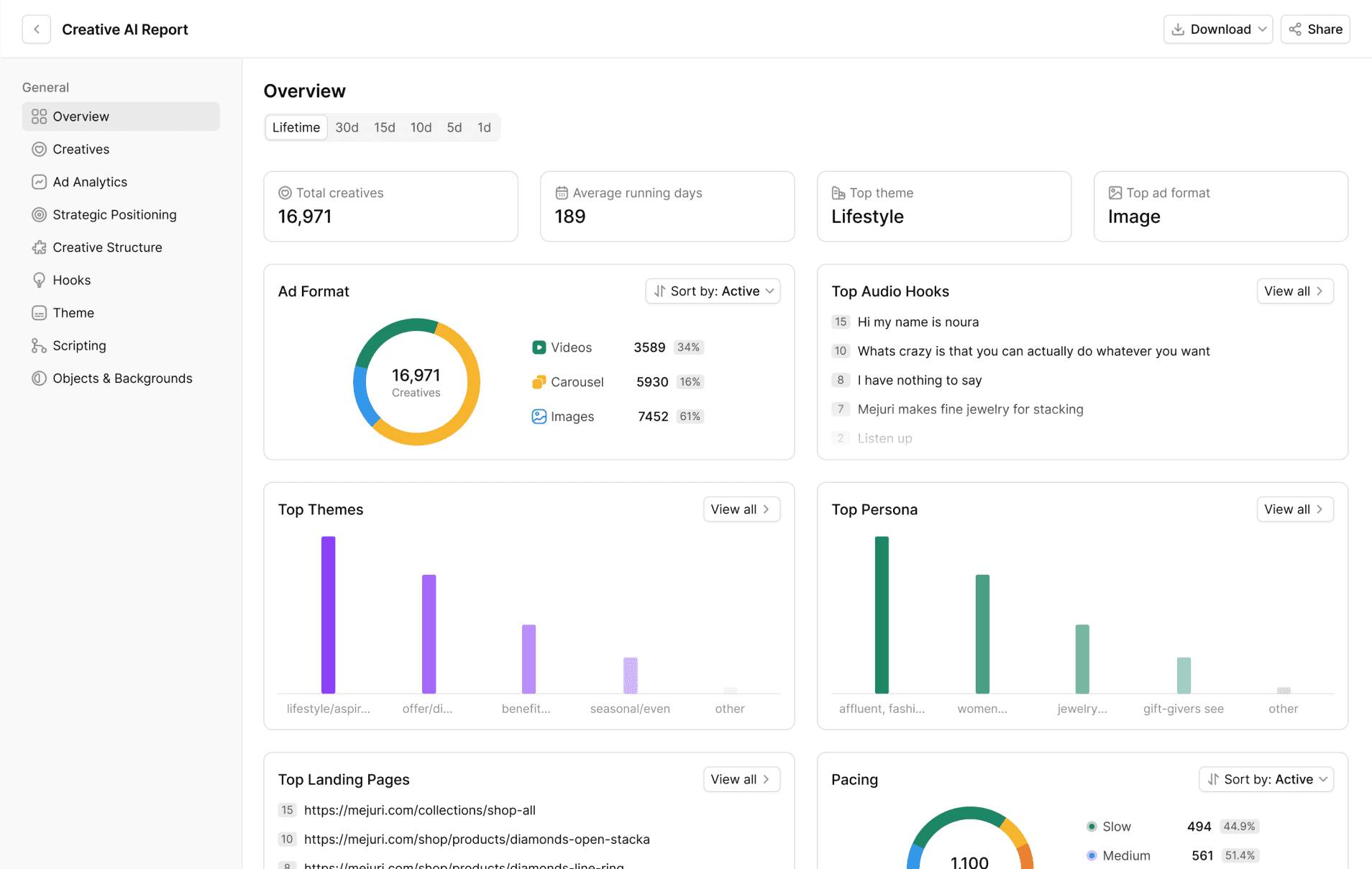
Creative AI Report
Creative Analytics transforms passive reporting into actionable insights. The AI Report dashboard aggregates performance data, breaking down total creatives by format (Video, Carousel, Image) and average running days. This high-level view gives marketers an instant understanding of what formats are driving the market.


Performance Analytics Dashboard
To tie creative efforts back to business ROI, a comprehensive analytics board was designed. The UI visualizes Spend vs. ROAS over time and allows marketers to group ads by name or tags. This enables teams to identify "Winner" and "Promo" creatives quickly, shifting the focus from vanity metrics to actual profitability.
Bulk Launch & Ad Copy
The Launch module simplifies campaign execution at scale. Instead of configuring ads one by one, the UI allows users to bulk-edit creatives, apply ad copy templates, and generate primary text variations. The interface handles high data density cleanly, ensuring users can review dozens of ad variations before publishing.


Tracking Specs & Launch Setup
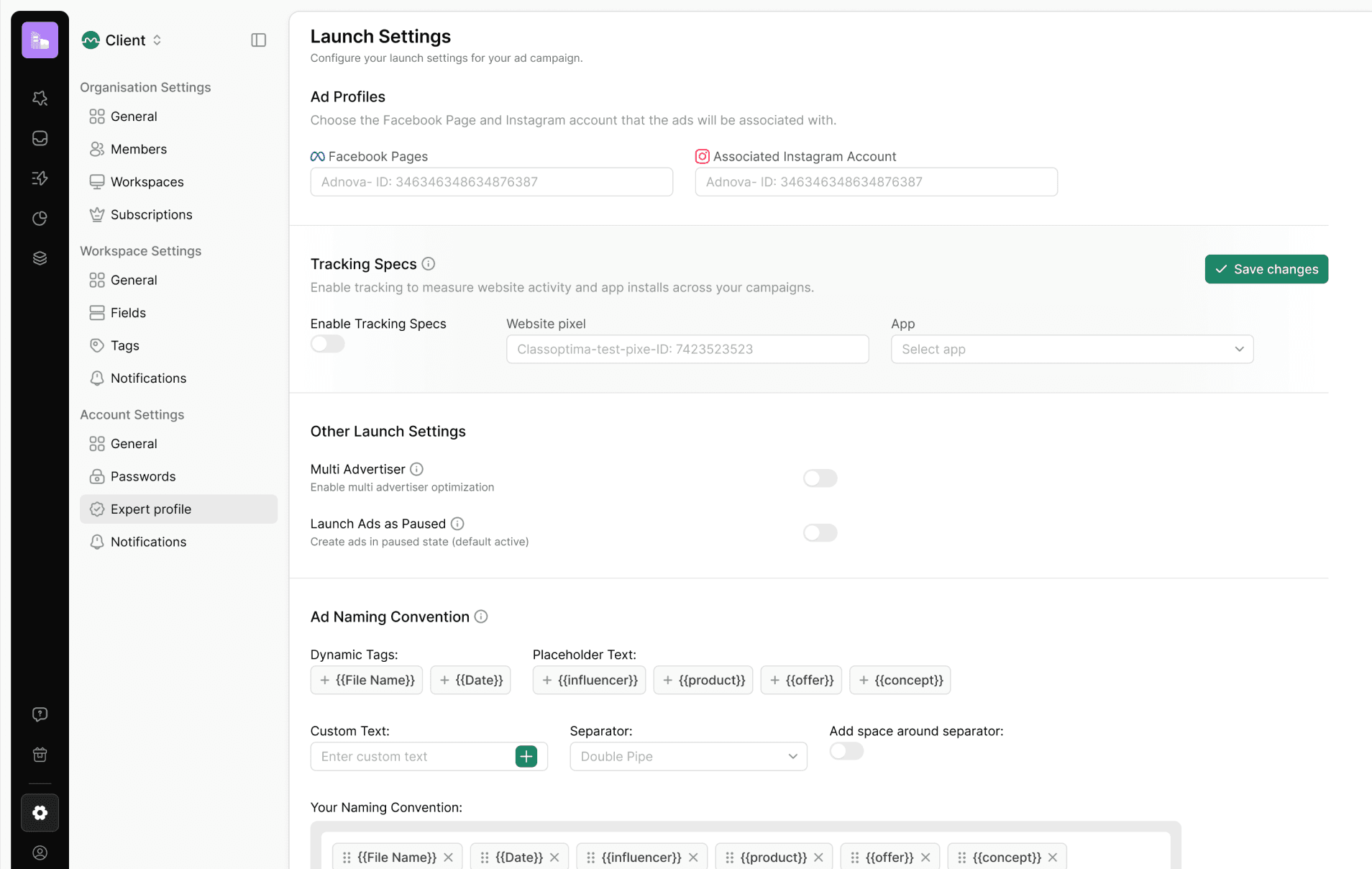
To ensure campaigns are measurable, the setup UI seamlessly integrates with ad account infrastructure. Users can connect website pixels, configure multi-advertiser optimization, and link associated Facebook and Instagram accounts directly within the platform. This bridges the gap between creative execution and performance tracking.
Platform Scale & Additional Workflows
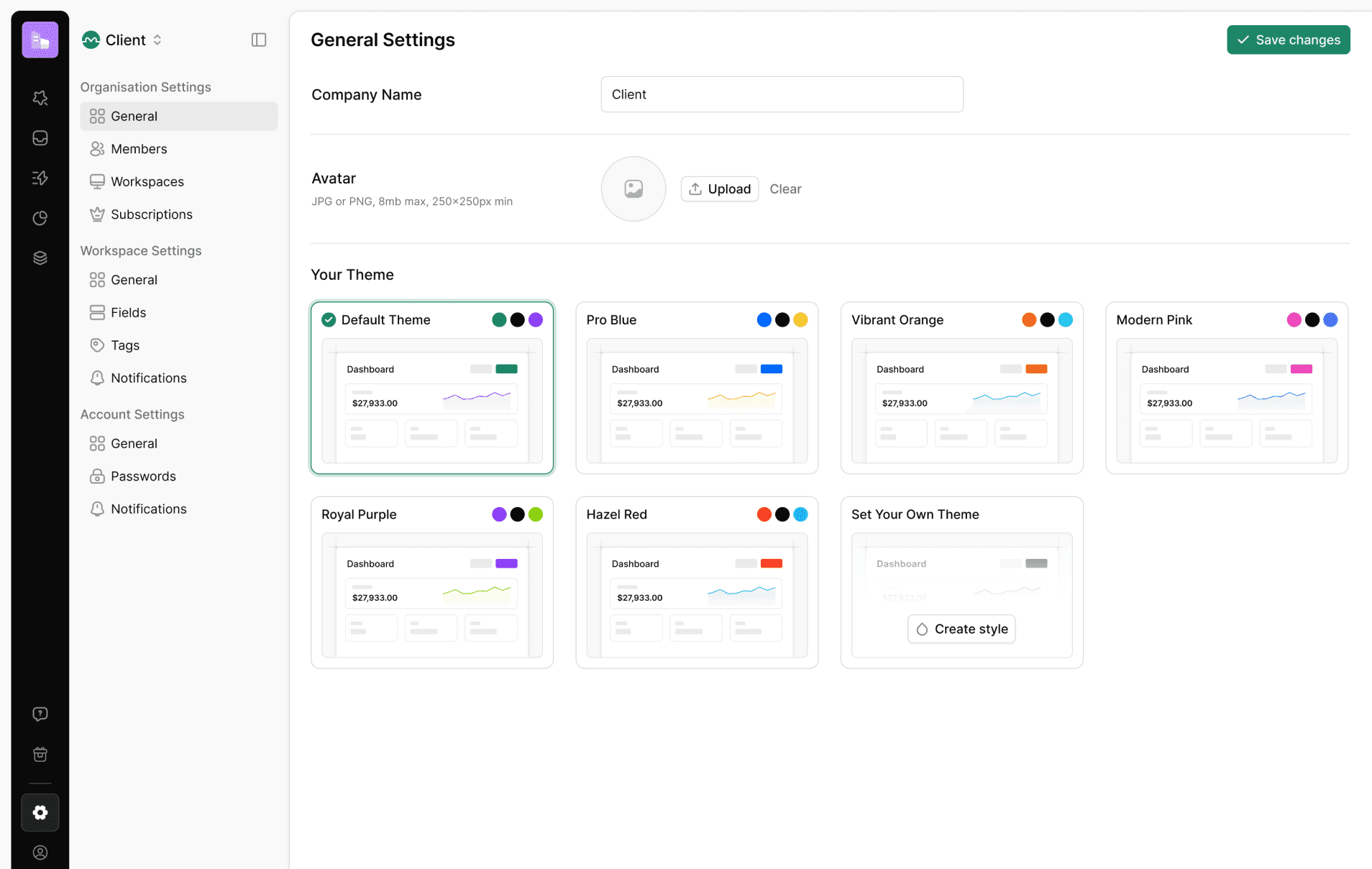
While the core workflow connected research to launch, the platform's true depth lay in its organizational and administrative features. The screens below showcase the scale of the ecosystem, from subscription management and workspace themes to detailed reporting snapshots.



Design System & Component Library
To ensure consistency and speed during this 0→1 build, a scalable design system was established from day one. This included reusable component sets for complex data tables, modal workflows, filter builders, and navigation patterns. By standardizing these elements, design debt was minimized, rapid iteration was enabled, and the engineering handoff process was accelerated.

Outcome
Adnova successfully transformed a fragmented marketing workflow into one connected platform.
Built from scratch in close collaboration with the founder, the platform rapidly gained market traction upon launch. Within the first few months, Adnova onboarded more then 5,000 brands and generated $100K plus in the initial months
By consolidating a $1,400/month tool stack into a single $300/month platform, and reducing campaign launch times from 3 hours to 15 minutes, the product proved that unifying the creative lifecycle was a highly viable business model.